The Rise of Mind Sports
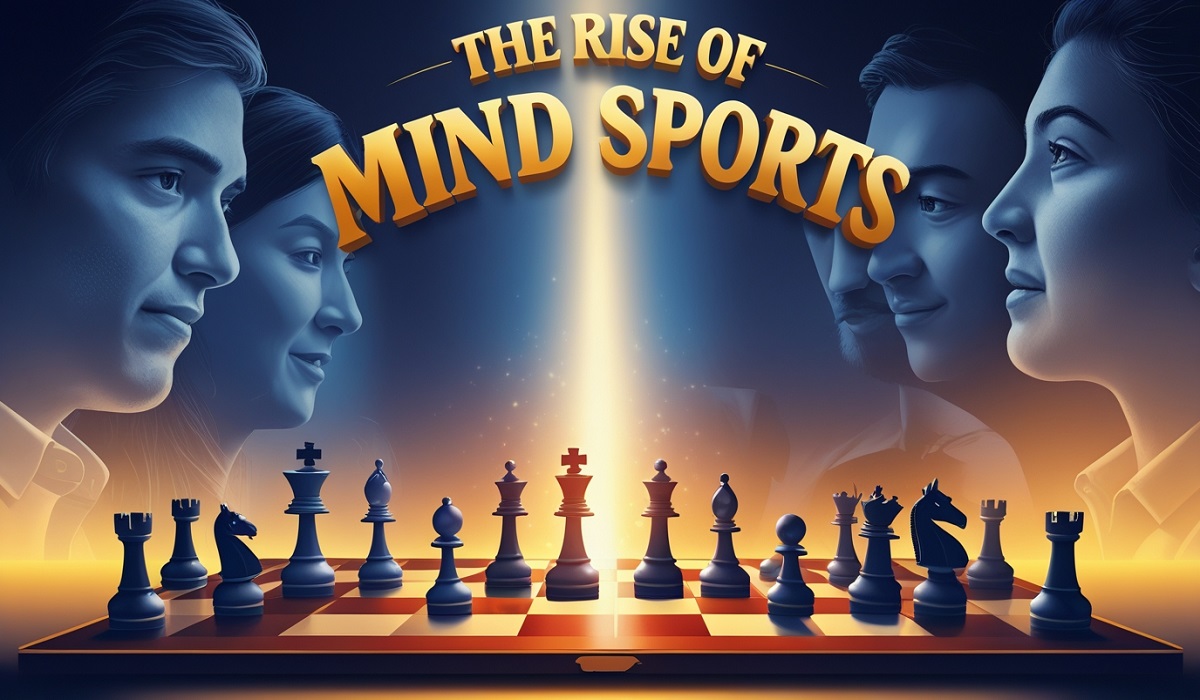
The Rise of Mind Sports: In a world where physical prowess has long dominated the spotlight, the rise of mind sports like competitive memory is reshaping how we think about competition and achievement. These intellectual battles, where athletes flex their brains instead of their muscles, are exploding in popularity.
From packed arenas to online streams drawing millions, mind sports are no longer niche hobbies—they’re a global phenomenon. As we dive into 2026, with fresh data showing surging participation and viewership, it’s clear that disciplines like competitive memory are leading the charge in this mental revolution.
Imagine memorizing the order of 10 shuffled decks of cards in under an hour or recalling hundreds of random numbers with pinpoint accuracy. That’s the thrill of competitive memory, a cornerstone of mind sports that’s captivating audiences worldwide. According to recent industry reports, the global chess market alone.
A key mind sport—is projected to hit $3.77 billion in 2026, up from $3.45 billion in 2025, reflecting a broader trend in strategic games. But it’s not just chess; competitive memory championships are seeing record-breaking attendance and digital engagement, signaling a shift toward valuing cognitive skills in our fast-paced, information-overloaded era.
What Are Mind Sports?
Mind sports encompass a wide array of games and competitions that prioritize strategy, logic, memory, and mental agility over physical strength. Think chess, poker, bridge, Go, and yes, competitive memory. Unlike traditional sports, these don’t require gym memberships or fancy equipment—just a sharp mind and relentless practice.
Competitive memory stands out as one of the purest forms of mind sports. Participants, often called “memory athletes,” compete in events like memorizing binary digits, historical dates, or even the faces and names of strangers.
The World Memory Championships, for instance, features 10 disciplines testing everything from speed cards to spoken numbers. In 2025, the event in Ho Chi Minh City, Vietnam, marked a historic first with full digital integration, ensuring transparency and attracting a new wave of tech-savvy competitors.
Other mind sports like bridge and backgammon are also thriving. The Mind Sports Olympiad, an annual event with over 100 competitions, continues to expand, drawing players from classics like Scrabble to modern additions like Dominion.
What ties them all together is the emphasis on mental endurance, much like a marathon for the brain. As viewership for sports in general surges—with digital live sports audiences expected to grow 8.3% in 2025—mind sports are riding this wave, appealing to fans who crave intellectual drama.
The History and Evolution of Competitive Memory
Competitive memory isn’t a new fad; its roots trace back to ancient civilizations where orators memorized epic poems. But the modern era kicked off in 1991 when Tony Buzan and Raymond Keene founded the World Memory Championships in London. What started as a small gathering has ballooned into an international spectacle.
By the early 2000s, memory sports gained traction with books like “Moonwalking with Einstein” by Joshua Foer, which chronicled his journey to becoming a U.S. Memory Champion. Fast forward to today, and the evolution is digital-driven. In 2025.
The USA Memory Championship saw Nelson Dellis claim his sixth title, with qualifying scores pushing the boundaries of human capability. Globally, the 2025 World Memory Championships in Vietnam integrated AI for scoring, a move that’s set to become standard in 2026, making events more accessible and fair.
This evolution mirrors broader trends in mind sports. Chess, for example, exploded post-Queen’s Gambit on Netflix, with online platforms like Chess.com reporting millions of daily users. Participation in mind sports has grown steadily, with youth involvement in strategic games up as part of the 55% overall youth sports participation rate in 2023, the latest available national data. As we enter 2026, expect hybrid formats—live events paired with virtual reality streams—to further democratize access.
Why Mind Sports Are Gaining Popularity in 2026?
The surge in mind sports’ popularity isn’t accidental. In 2026, several factors are converging to propel them into the mainstream. First, the digital age demands strong cognitive skills. With information overload from social media and work, training your memory isn’t just a game—it’s a survival tool.
Statistics back this up. Global sports media rights are poised to hit $67 billion by 2026, driven by expanding audiences for intellectual competitions. Viewership for sports documentaries, often featuring mind athletes, reached 16,937 million minutes in 2024, a 113% jump from 2021, and 2025 is on track for similar numbers.
Mind sports appeal to diverse demographics, especially Gen Z and Millennials, who value mental health and skill-building. A recent generational fan study shows younger fans engaging more with content that blends strategy and storytelling.
Moreover, the pandemic accelerated online gaming, and mind sports fit perfectly into streaming culture. Platforms like Twitch and YouTube host live memory challenges, drawing viewers who might never attend a physical event.
In youth sports, trends like esports are blurring lines, with mind sports benefiting from the crossover. Participation in kids’ strategic programs is rising alongside fast-growers like flag football and volleyball. Women’s involvement is also skyrocketing, mirroring the 3.54 million high school girls in sports in 2024-25.
Economic factors play a role too. With women’s elite sports revenue hitting $2.35 billion by 2025, mind sports are attracting sponsors who see value in inclusive, brain-based competitions. As traditional sports face saturation, mind sports offer fresh excitement without the injury risks.
Key Events and Championships in Mind Sports for 2026
2026 is shaping up to be a banner year for mind sports enthusiasts. The World Chess Championship, set for March 28 to April 6 in Cyprus, will feature defending champions like Gukesh Dommaraju (men’s) and Ju Wenjun (women’s), building on 2025’s excitement. Expect massive viewership, especially with chess’s market growth at a 9.28% CAGR through 2034.
For competitive memory, the 35th World Memory Championships location is yet to be announced, but following 2025’s digital leap in Vietnam, it promises innovations like VR training sessions. The USA Memory Championship will qualify top athletes in July, leading to finals in August.
Don’t miss the Mind Sports Olympiad, with its PerGioco Masters in January 2026 focusing on abstract gaming. Bridge fans have the World Championship in Las Vegas, October 16-18, where teams like Canada’s 2025 gold medalists will defend. These events aren’t just competitions; they’re hubs for networking and learning, with live streams boosting global reach amid an 8.3% rise in digital sports viewership.
Benefits of Participating in Mind Sports
Engaging in mind sports like competitive memory offers more than trophies—it’s a boost for your brain and life. Studies show memory training enhances cognitive function, reducing risks of dementia and improving focus. Athletes often report better academic and professional performance, as techniques like the “method of loci” translate to real-world tasks.
Mentally, it’s a stress reliever. In a high-pressure world, the strategic flow state of mind sports provides mindfulness-like benefits. Physically inactive? No problem—it’s accessible to all ages and abilities, promoting inclusivity. Youth participation in such activities aligns with national goals, where 55% of kids played organized sports in 2023, fostering lifelong habits.
Socially, communities thrive. From local clubs to international forums, mind sports build connections. Economically, top athletes earn prizes—some memory champs pocket thousands—and sponsorships are growing with the market.
How to Get Started in Competitive Memory?
Ready to dive in? Start simple. Learn basic techniques like associating numbers with images or creating mental palaces. Books by Dominic O’Brien, an eight-time world champion, are great primers.
Join online communities via Reddit or the International Association of Memory (IAM). Practice with apps like Anki or Memrise. Enter local competitions—many countries host national memory leagues.
For 2026, aim for qualifiers like the USA event. Train consistently: 30 minutes daily can yield results. Watch pros like 2025 world champ Vishvaa Rajkumar for inspiration. Remember, it’s about progress, not perfection.
To boost your blog’s SEO, incorporate internal links to related posts like “Top Memory Techniques for Beginners” and external links to sites like worldmemorychampionships.com for authority. This enhances user experience and signals relevance to search engines.
Frequently Asked Questions About Mind Sports and Competitive Memory
What is the difference between mind sports and esports?
Mind sports focus on traditional intellectual games like chess and memory, emphasizing strategy without digital interfaces, while esports involve video games. Both are growing, but mind sports appeal more to purists.
How can I improve my memory for competitive events?
Practice mnemonic devices, maintain a healthy lifestyle with sleep and exercise, and use spaced repetition. Consistent training, like daily card memorization, builds capacity over time.
Are there age limits for participating in memory championships?
No strict limits—events have categories for kids, juniors, adults, and seniors. The 2025 USA Championship welcomed competitors from age 13 upward.
What role does technology play in modern mind sports?
Technology enhances fairness through digital scoring and expands reach via streaming. In 2026, expect more AI-assisted training tools.
Can mind sports help in professional careers?
Absolutely. Enhanced memory and strategic thinking aid in fields like law, medicine, and business, where quick recall and decision-making are key.
Join the Mind Sports Revolution Today
The rise of mind sports like competitive memory in 2026 isn’t just a trend—it’s a movement toward valuing the power of the human mind. With participation soaring, viewership exploding, and events more accessible than ever, there’s no better time to get involved. Whether you’re a curious beginner or a seasoned strategist, these competitions offer endless opportunities for growth and excitement.
Ready to sharpen your skills? Check out upcoming events on the World Memory Championships site and start training today. Share your thoughts in the comments—what mind sport intrigues you most? Let’s build a community of mental athletes right here.