Designing Sports for a Zero-Gravity Environment
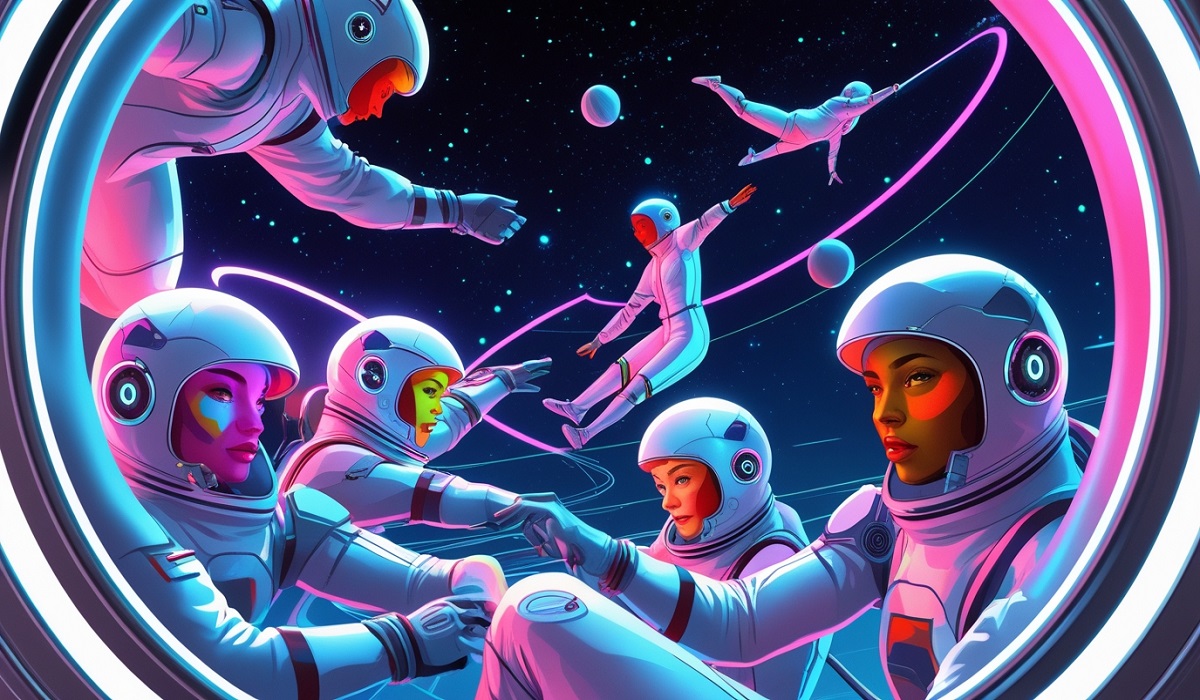
Designing Sports for a Zero-Gravity Environment: Imagine a world where athletes soar through the air without the pull of gravity holding them back, twisting and turning in ways that defy everything we know about traditional sports. Designing sports for a zero-gravity environment isn’t just a sci-fi dream—it’s becoming a reality as space exploration ramps up.
With private companies like SpaceX and Blue Origin pushing the boundaries of human presence in orbit, the idea of competitive games in microgravity is capturing imaginations worldwide. This shift opens up endless possibilities for new forms of athleticism, where strategy, agility, and innovation take center stage in the vast expanse of space.
As we dive into 2026, advancements in space technology are making zero-gravity sports more feasible than ever. From experimental designs tested on parabolic flights to upcoming challenges that could redefine competition, this article explores how we’re crafting games for environments where up and down don’t exist. Whether you’re a sports enthusiast, a space buff, or just curious about the future, understanding the intricacies of zero-gravity sports design can give you a glimpse into humanity’s next big leap.
The Challenges of Designing Sports in Zero Gravity
Creating sports for zero gravity comes with a unique set of hurdles that go beyond what we face on Earth. Gravity is the invisible force that shapes every game we play—from the arc of a basketball shot to the sprint of a soccer player. Remove it, and everything changes.
One major challenge is movement. In zero gravity, athletes don’t have the ground to push off from, so propulsion relies on momentum, handholds, or even specialized equipment. This means sports designers must rethink basic mechanics.
For instance, running becomes floating, and jumping turns into controlled launches. According to experts from the Space Games Federation, which has been pioneering this field since the early 2020s, athletes could experience disorientation or “space adaptation syndrome,” similar to what astronauts face on the International Space Station (ISS). This nausea and confusion could sideline players if not addressed through proper training.
Another issue is safety. Without gravity, collisions can be more unpredictable and potentially dangerous. Objects—and people—keep moving until something stops them, following Newton’s first law in its purest form.
Designers need to incorporate padded arenas, magnetic restraints, or velocity limits to prevent injuries. Recent experiments in 2025, like those conducted during zero-gravity flights by organizations such as Zero-G Corporation, have shown that even simple games like tag can lead to chaotic bounces if not structured properly.
Fluid dynamics also play a role. Sweat doesn’t drip off in zero gravity; it floats around, potentially obscuring vision or creating slippery surfaces. Air circulation systems in space habitats must be optimized for sports to keep the environment clear. As of 2026, ongoing research at facilities like the new neutral buoyancy lab at the University of North Dakota.
Which broke ground in 2025, is helping simulate these conditions underwater to test designs before they go orbital. This lab allows researchers to mimic zero gravity by adjusting buoyancy, providing valuable data on how bodies move in weightless settings.
Despite these obstacles, the rewards are immense. Zero-gravity sports could promote physical fitness in space, combating muscle atrophy and bone loss that astronauts endure on long missions. They also level the playing field, making athletics accessible to people with disabilities who might struggle in Earth’s gravity. The Space Games Federation’s Equal Space initiative emphasizes this inclusivity, aiming to create games where everyone competes on equal terms.
Innovative Game Designs for Microgravity Environments
When it comes to actually designing sports for zero gravity, creativity is key. Traditional games need radical overhauls, while entirely new ones are emerging from global competitions.
Take basketball, for example. In zero-gravity basketball, players might use walls, ceilings, and floors as part of a 3D court. The hoop could be a floating ring that moves, adding an element of pursuit. A recent concept from 2026 highlights youth tournaments blending athleticism with innovation.
Where kids as young as 12 design rules for “ruckball,” a variant involving Velcro balls and padded suits to stick to surfaces. This not only engages the next generation but also tests scalable ideas for professional play.
The Space Games Federation has been at the forefront, hosting challenges like the Equal Space Challenge. In 2022, they selected five semifinalist games, many proposed by teenagers: Inno, where teams bounce balls off Velcro walls into goals; Spaceball, using magnetic balls and hoops; Shooting Star, involving drone defenses.
Space Dodgeball, blending evasion with obstacle throws; and Float Ball, a mix of football, dodgeball, and basketball with multiple goals. By 2026, these concepts have evolved, with prototypes tested in parabolic flights. The federation’s STEAM+ program integrates sports into education, preparing students for space careers while refining these games.
Other ideas draw from existing sports. Soccer in zero gravity could involve teams maneuvering a ball through a spherical arena using thrusters or hand paddles. Videos from ISS astronauts in Expedition 40 show informal football sessions, where floating skills and teamwork shine without ground contact. For combat sports like wrestling, zero gravity adds twists—grapples become aerial maneuvers, requiring core strength to control spins.
In 2025, Blue Abyss and NovaCorp Aerospace signed an agreement to launch zero-gravity entertainment, including live sports in the stratosphere. This paves the way for 2026 experiments, potentially broadcasting demo games from high-altitude balloons.
These designs prioritize fun and strategy over brute force, making zero-gravity sports appealing to a broad audience. As space tourism grows, with companies planning orbital hotels by the late 2020s, these games could become staples for visitors seeking thrills beyond Earth’s bounds.
Technology and Equipment for Zero-Gravity Athletics
No sport thrives without the right gear, and zero-gravity environments demand cutting-edge tech to make play possible and safe.
Suits are a starting point. Traditional uniforms won’t cut it; athletes need lightweight, flexible outfits with built-in propulsion like small air jets or magnetic boots for controlled movement. At CES 2026, French startup Reconcept unveiled a zero-gravity wellness pod that combines therapy with massage in a floating posture, originally for military use but adaptable for sports recovery. This tech could help athletes combat stress and fatigue in space.
Arenas themselves must be innovative. Inflatable modules or repurposed space station sections could serve as courts, with sensors tracking player positions in 3D. Magnetic fields might simulate partial gravity for hybrid games, or LED lights could define boundaries in the dark void of space.
Balls and equipment need rethinking too. In zero gravity, a standard ball floats indefinitely, so designs incorporate weights, magnets, or even remote controls. For example, in Spaceball, the magnetic properties ensure the ball interacts with hoops dynamically.
Health monitoring is crucial. Wearables track heart rates, oxygen levels, and motion sickness in real-time. Data from 2025 zero-gravity flights, which included over 2,300 research missions by Zero-G Corporation, informs these devices, covering everything from stem-cell studies to in-space manufacturing. In 2026, an experiment from Lunion Innovations is heading to the ISS, potentially testing sports-related tech in actual microgravity.
To boost SEO, link internally to related articles on your site, like “Top Space Tourism Destinations in 2026” or “How Microgravity Affects the Human Body.” Externally, reference authoritative sources such as NASA’s microgravity research page or the Space Games Federation’s challenge winners for credibility and backlinks.
Training and Preparation for Zero-Gravity Sports
Becoming a zero-gravity athlete requires a training regimen that’s out of this world—literally.
Parabolic flights offer short bursts of weightlessness, about 20-30 seconds per dive, allowing teams to practice maneuvers. Companies like Zero-G have elevated perspectives for space futures, with flights in 2025 inspiring mentees like Alma Irala, whose work leads to 2026 ISS experiments.
Neutral buoyancy pools simulate zero gravity underwater. The new facility at UND’s Altru Sports Complex, set for completion in 2026, will let trainees float in gear, mimicking space movements. Astronauts have used similar setups for decades, but now they’re accessible for sports prep.
Mental preparation is equally important. Virtual reality simulations help athletes visualize 3D strategies, while yoga and core exercises build the stability needed for floating combat. The Space Games Federation’s Global Space Tie-Off Challenge, launched in October 2025, evolved into the Stardust Challenge streaming live on February 16, 2026, engaging global participants in knot-tying races under simulated conditions. This event marks a milestone, opening athletics to new frontiers.
Nutrition and recovery adapt too. High-calorie diets combat energy loss in microgravity, and devices like the CES 2026 wellness pod aid in stress relief.
For SEO enhancement, include internal links to training guides, such as “Best Workouts for Space Travel,” and external ones to flight providers like Blue Origin for authoritative tie-ins.
The Future of Zero-Gravity Sports in 2026 and Beyond
Looking ahead, 2026 is a pivotal year for zero-gravity sports. With space stations like Vast’s artificial-gravity habitats in development, hybrid games blending zero and partial gravity could emerge. The Space Games Federation aims for an exhibition sport in space by 2028, building on 2026 milestones like the Stardust Challenge.
Commercial spaceflight’s growth means more opportunities. SpaceX’s Starship missions and Blue Origin’s orbital plans could host demo games, turning space into a spectator arena. Broadcasting challenges exist—delays in signals from orbit—but VR streaming could immerse Earth-bound fans.
Inclusivity drives progress. Zero gravity equalizes competition, attracting diverse athletes. Youth programs, like those in zero-gravity basketball concepts, foster interest early.
By 2030, we might see a “Space Olympics,” with events like those hypothesized in blogs: aerial basketball or floating volleyball. But 2026 sets the stage, with experiments and challenges proving viability.
To optimize SEO, strategically place internal links to future-tech articles and external ones to federation updates, encouraging shares and engagement.
FAQs About Designing Sports for a Zero-Gravity Environment
What are the best sports to adapt for a zero-gravity environment?
Adapting sports like basketball or soccer works well because they involve ball handling and team strategy, but with 3D movement. New designs like Spaceball or Inno from the Space Games Federation add magnetic elements for control.
How do athletes train for zero-gravity sports in 2026?
Training uses parabolic flights, neutral buoyancy pools like the one at UND, and VR simulations. The Stardust Challenge in February 2026 offers hands-on practice in simulated weightlessness.
What safety measures are needed for zero-gravity sports design?
Padded arenas, velocity caps, and health monitors prevent injuries. Sweat management and anti-collision tech are essential, as tested in 2025 flights.
Can zero-gravity sports become mainstream by 2028?
Yes, with the Space Games Federation planning exhibitions. Advances in space tourism make it likely, turning concepts into reality.
How does technology influence zero-gravity sports equipment in 2026?
Innovations like magnetic balls and wellness pods from CES 2026 enhance play and recovery, making gear smarter and safer.
Ready to Explore the Stars? Join the Conversation
Designing sports for a zero-gravity environment is more than innovation—it’s about expanding human potential. As 2026 unfolds with challenges like Stardust and new tech unveilings, the sky isn’t the limit; space is.
If this sparks your interest, dive deeper into space athletics. Subscribe to our newsletter for updates on emerging trends, or share this article with fellow enthusiasts. What zero-gravity sport would you invent? Comment below and let’s brainstorm the future together!